If your web titles lack impact, the problem is often contrast between fonts. High contrast font combinations for web titles create immediate visual hierarchy your eyes know exactly where to look. This is not about random pairings. It is about choosing two typefaces that differ clearly in weight, structure, or style, so the title stands out without shouting.
What makes a high contrast font combination?
High contrast means two fonts are clearly different. For high contrast font combinations for web titles, think bold headline with a light subtext, or a geometric sans paired with a refined serif. The difference can be in weight (extra bold vs light), in form (rounded vs sharp), or in era (modern slab vs old-style script). The key is that one font does the heavy lifting and the other supports without competing.
This works best for hero sections, blog post headers, or landing page titles where you need to grab attention fast. Low contrast combinations like two medium-weight sans serifs often feel flat. High contrast gives energy and direction.
When should you use high contrast for titles?
Use high contrast when your title needs to communicate hierarchy. If your main headline is bold and display-oriented, a lighter sans serif for the subtitle reads as secondary information. This is especially useful for e-commerce product names, event headers, or portfolio pieces where you want the brand name to dominate and a tagline to follow.
Avoid high contrast in body text areas. It belongs in titles and short phrases. For longer paragraphs, keep contrast low to maintain readability.
How to choose the right contrast for your brand
Different websites call for different contrast approaches. For a creative agency, try bold and light font pairings for website headers a chunky display font for the main word and a thin sans for the rest. This creates drama. For a corporate site, classic serif and geometric sans font combinations offer contrast without being loud. A serif for the headline and a clean sans for the subtitle reads professional.
If your site targets a young audience, try pairing a hand-drawn script with a rounded sans. For a tech product, a monospace font with a thin sans can signal precision. The personal condition here is your brand personality not hair texture but visual tone.
Common mistakes and how to fix them at home
The most frequent mistake is choosing fonts that are different but not complementary. For example, a script and a blackletter both heavy the contrast disappears. Another error is using three or more typefaces in one title. Stick to two. Also, watch out for size mismatch. If the secondary font is too small, it becomes illegible. Keep a minimum 2:1 size ratio between headline and subtext.
To fix this at home, test your combination on a high-density screen. Use a contrast ratio tool to check readability. If the lighter font is too thin at small sizes, increase its weight slightly. Always preview on mobile.
Quick checklist for high contrast web titles
- Pair one heavy and one light font (weight contrast).
- Keep the heavy font for the main headline, light for support.
- Avoid mixing two display fonts that are both decorative.
- Test with real content not just placeholder text.
- Check contrast ratio between background and text (4.5:1 minimum for small text).
- Limit to two typefaces per title section.
Start with a clear intent. Pick one dominant font and one that serves it. Your titles will communicate hierarchy instantly, and visitors will know what matters most.
Try It Free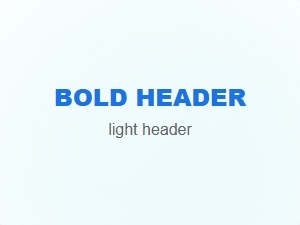 Creating Contrast with Bold and Light Font Pairings
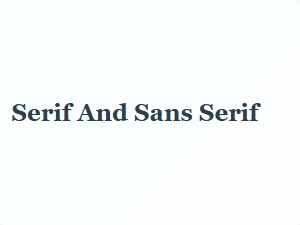 Serif and Sans Serif Font Pairings for Heading Contrast
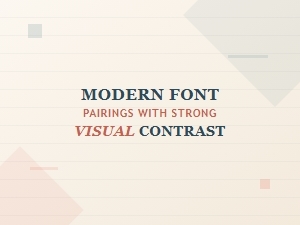 Modern Font Pairings with Strong Visual Contrast
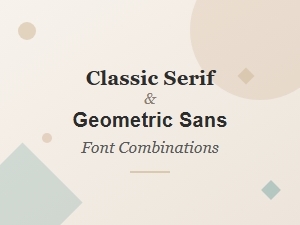 Pairing Classic Serif with Geometric Sans
 Best Font Pairings for Modern Website Headings
 Elegant Serif Font Combinations for Luxury Branding